Illustrative example: Lystok Coffee
Eleven of twelve shops reached the top three in local search for their own neighbourhoods.
These fictional projects show how a marketing project could be presented. The brands, people, quotes, artwork and results are invented; they are not evidence of client work or promised outcomes.
Where things stood.
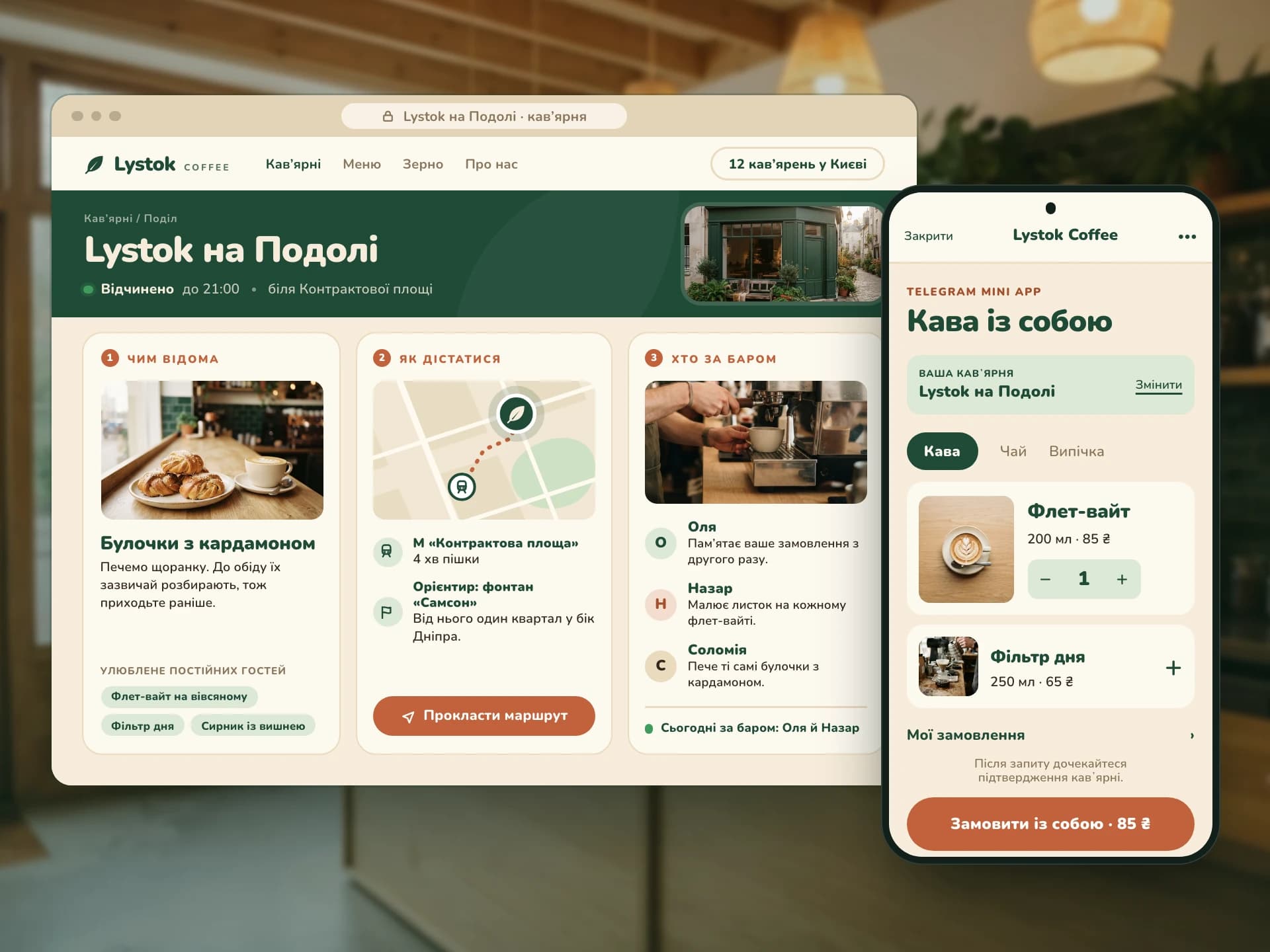
Lystok had opened twelve locations in three years and marketed all of them from one Instagram account. Two profiles were unclaimed, four had the wrong opening hours, and the website had a single “Locations” page listing addresses as plain text.
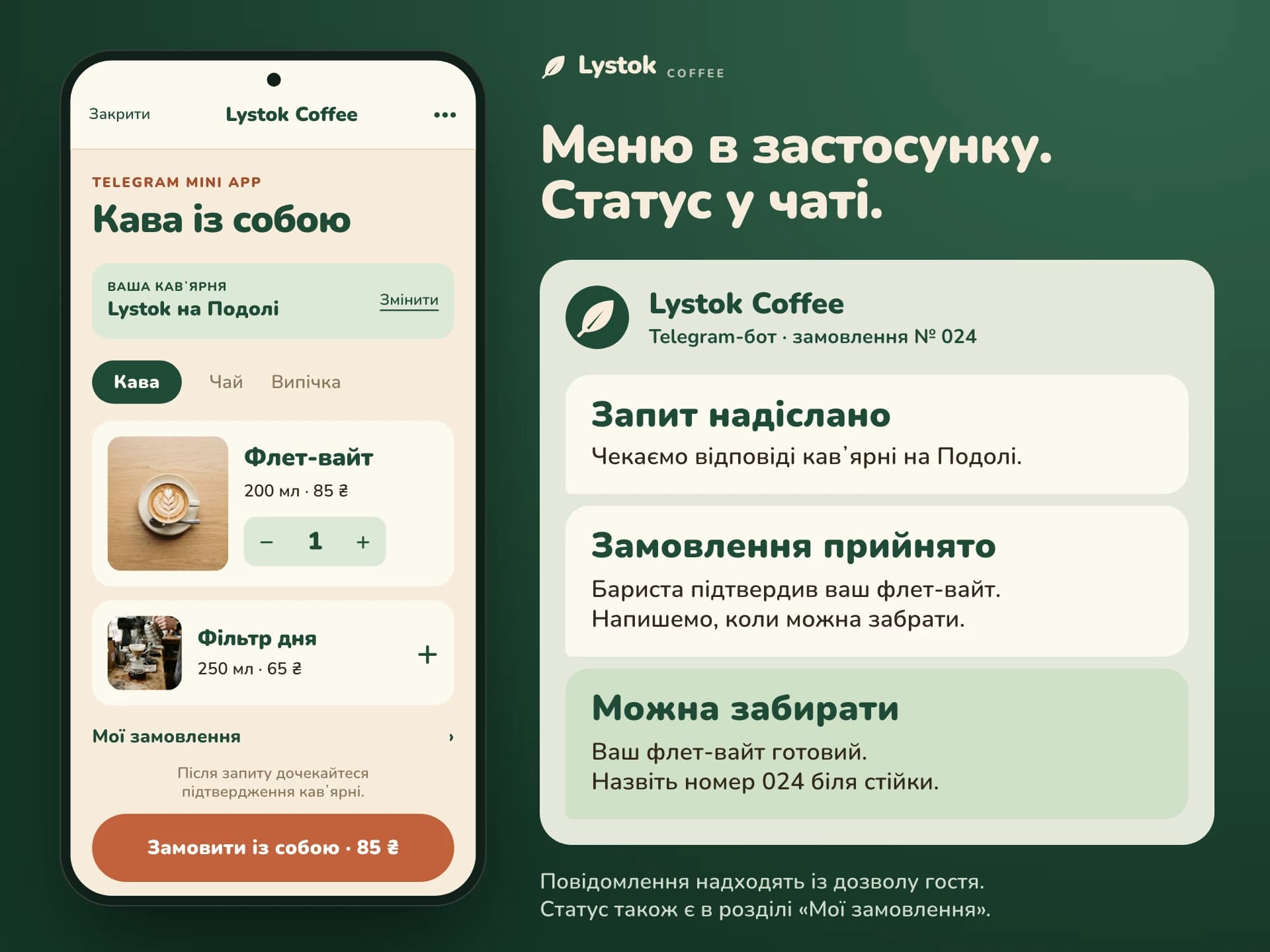
The goal was more visits to the shops. Alongside the search work, Lystok wanted customers to choose a café, browse its menu and request pickup inside Telegram. Staff would accept each request before the bot confirmed it. The figures below measure local search and reviews; they do not measure Telegram orders.
What the audit found
2 weeks, 12 profiles- Duplicate and unclaimed listingsSeventeen listings for twelve shops, two of them unclaimed and one pointing at a closed address.
- No location pagesOne address list meant no shop could rank for its own neighbourhood.
- Reviews unanswered340 reviews, 11 replies. The three lowest-rated shops were the three busiest.
Three steps, in order.
A proposed plan within this fictional project.
- 01Weeks 1 to 5
Claim, merge, clean
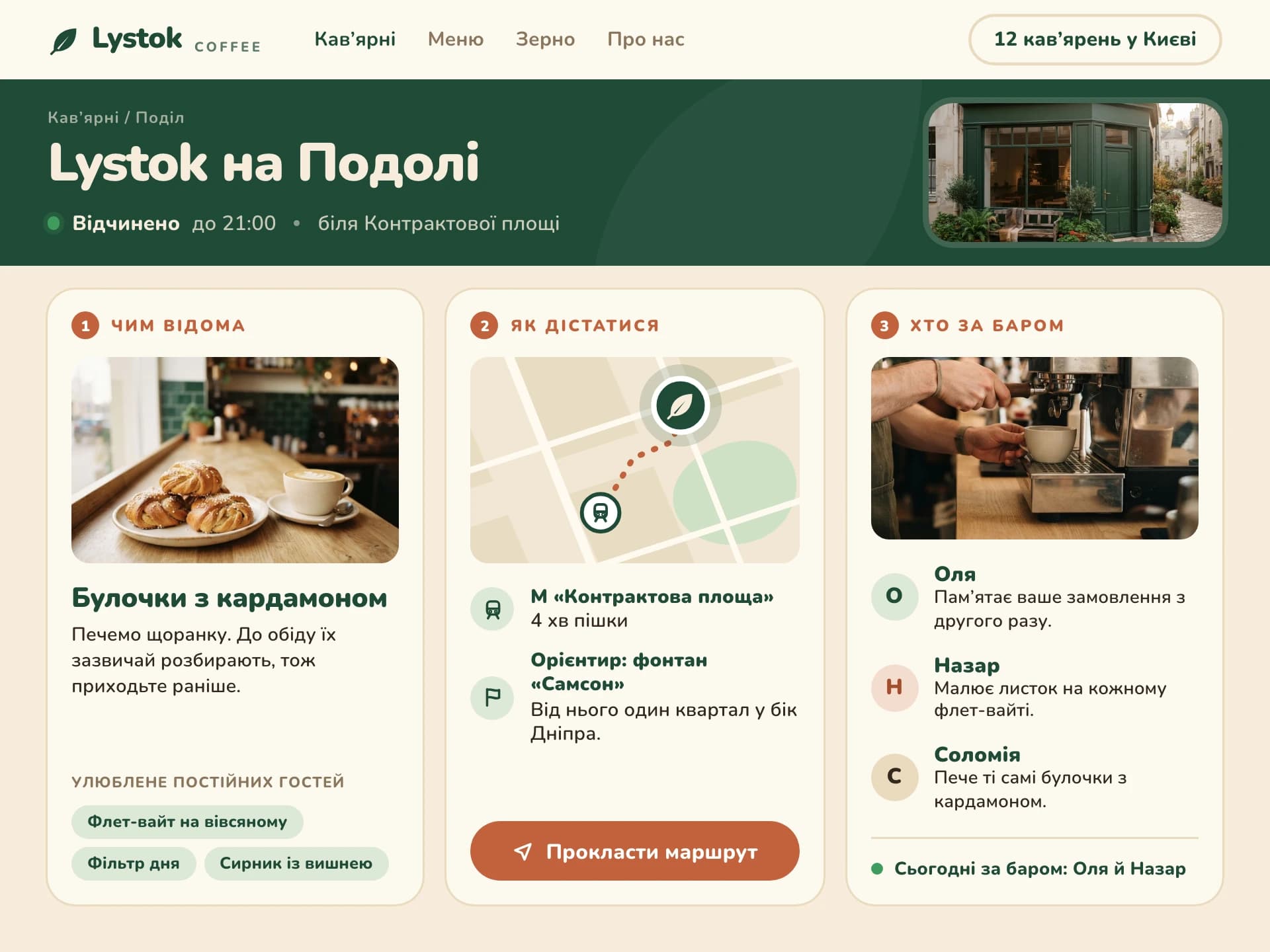
We claimed and merged every profile, standardised hours and photos, and gave shop managers a weekly routine for replying to reviews.
- 02Weeks 3 to 10
Location pages and Telegram ordering
We built a page for each shop and a Telegram Mini App, a small app that opens inside Telegram. Customers choose a café, browse the menu and send a pickup request. Staff accept or decline it, then mark accepted orders ready. A companion bot sends updates to customers who allow messages; the current status also stays in the app.
- 03Weeks 8 to 56
One calendar, twelve voices
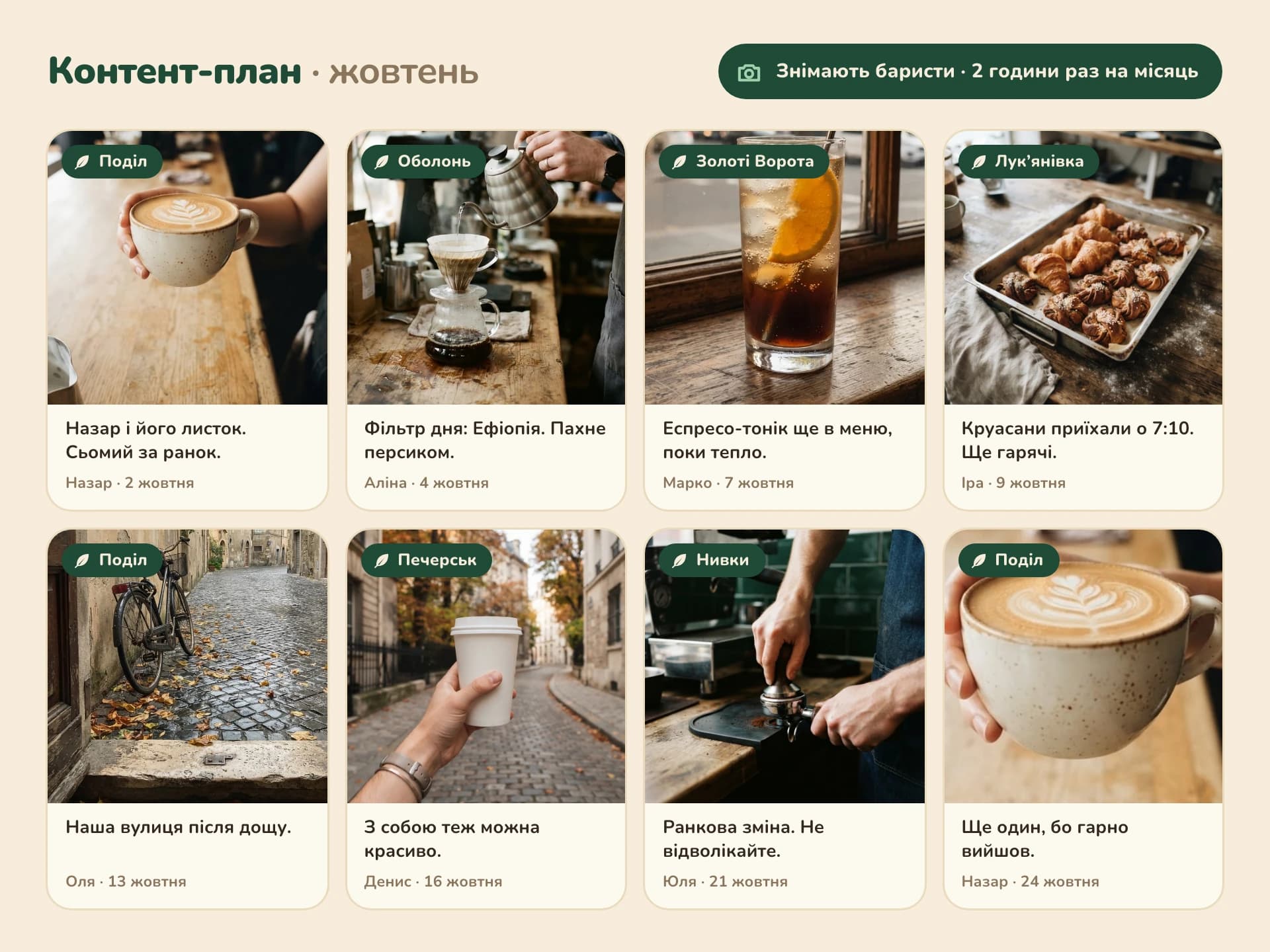
A single content calendar the baristas filled with drinks, latte art and neighbourhood posts, published separately for each location.
The work itself.
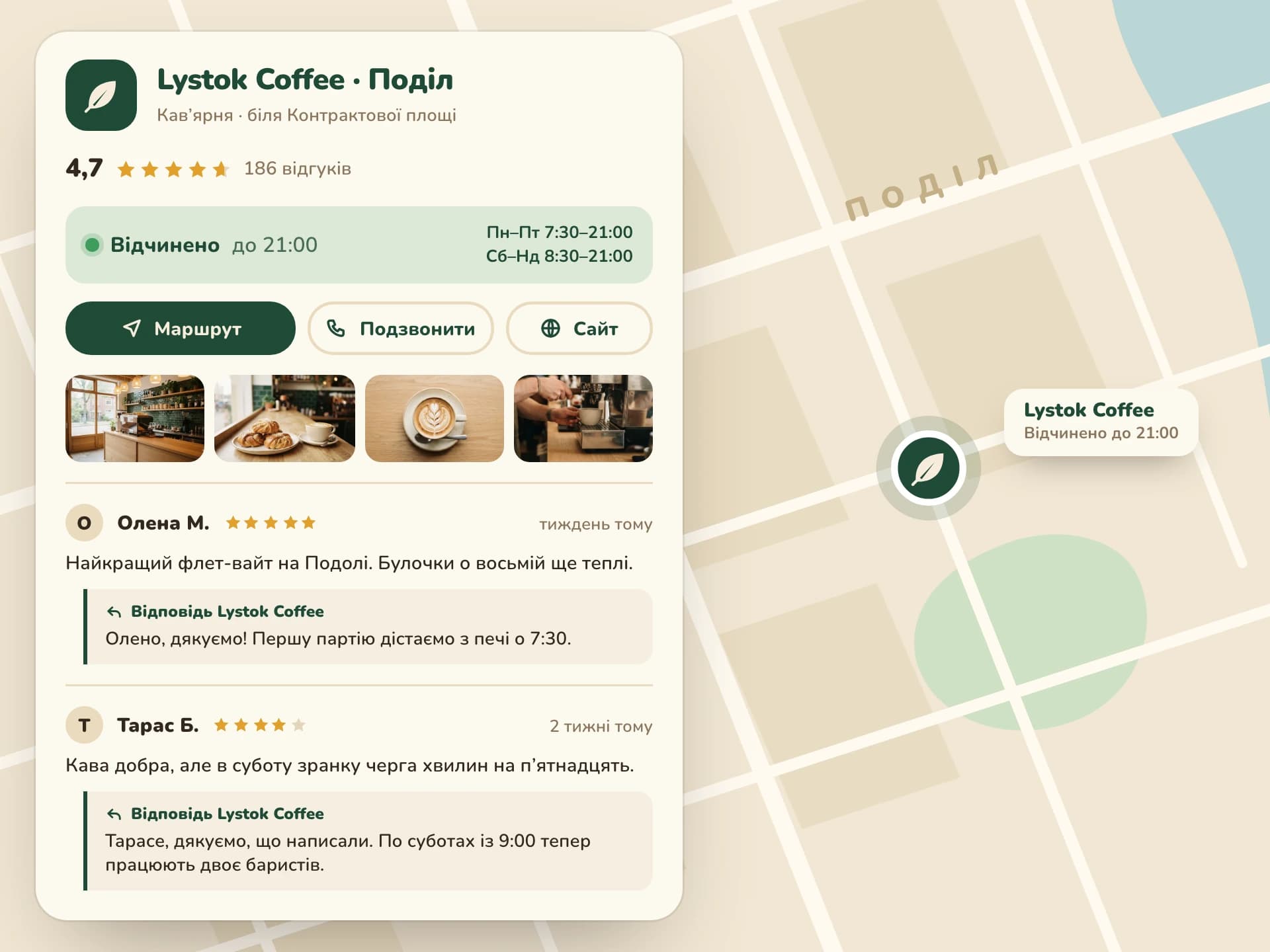
What changed, and by how much.
Illustrative figures
Twelve locations, one content calendar, and store managers who finally understood what marketing was doing for them.
What we’d do differently.
Illustrative exampleWe launched all twelve location pages in one week, which made the traffic jump impossible to attribute cleanly. A staggered rollout would have given us a proper control group.
A lesson explored in this fictional scenario.


Choose the number you want to improve.
Have a similar challenge? Tell us about your project and the result you want.